Problem
Architectural problems hide as churn. Some files attract every change; some always change together even though the module structure claims they're independent. Humans normalize this friction. Agents pay for it too: hot files get re-read into context constantly, and edits concentrate exactly where the conflicts and bugs live. The structure looks fine; only the history shows the problem.
Pattern
Mine version control for behavioral signals (Adam Tornhill-style analysis):
- Hotspots: change frequency × complexity — files that are both churned and complicated
- Change coupling: files that repeatedly change in the same commits despite no visible dependency
Hand the findings to the agent as design constraints:
- "These five files change together in most commits — propose a redesign that lets them change independently"
- "This file is touched by every feature — split it along its reasons to change"
Refactor incrementally toward the proposed design.
The metrics nominate candidates, they never decide. Churn says where change lands, the code says why — read every candidate before acting on it.
Canary in the Code Mine reads the agent's live struggle; Surface Change Attractors finds the same signal in your history, before the struggle.
An open-source implementation is available at https://github.com/devill/ivetts-skills#hotspot-rec
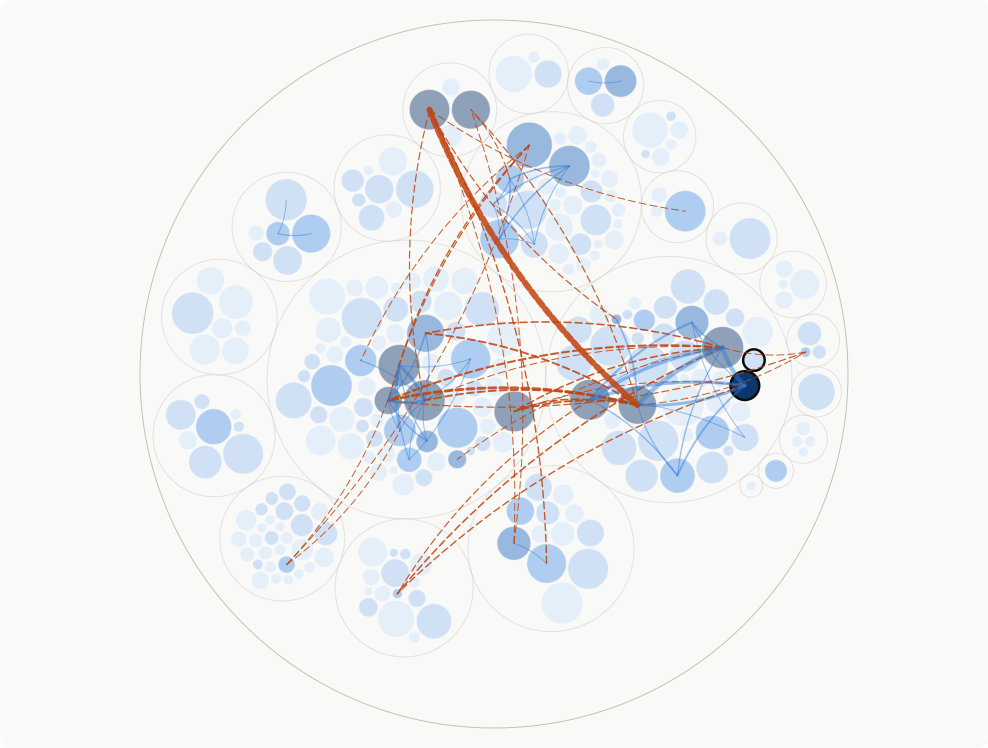
Circles are files, sized by lines and colored by commits; outlined circles are packages. Orange dashed lines join files that change together across a package boundary — co-change the architecture says should not happen.
Example
A script over git log counts per-file commit frequency and co-change pairs (code-maat and CodeScene do this out of the box — or Offload Deterministic: have the agent write the script). The top attractor is a 900-line "service" touched in 70% of commits, co-changing with a validator and a serializer in two other modules. Given those constraints, the agent proposes moving validation and serialization behind the service's interface. After the refactor, features stop fanning out across three modules.
